Welcome

This blog was started as my reflections on the 2011 Change MOOC. It is now an on going journal of my thoughts on Higher Education, specifically teaching Biology.

Monday, August 13, 2012

Good MOOC/Bad MOOC

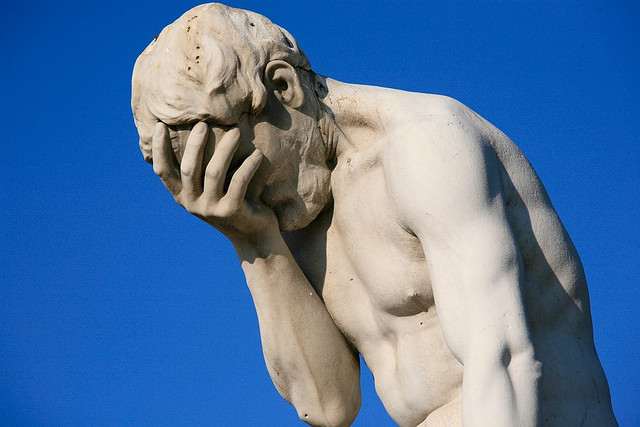
When I hear the Good/Bad discussion, this is the image that comes to mind.  Have gone through a number of MOOCs over the past two years, both as lurker and active participant, there are some likes and dislikes I can identify.

1.  I like to have conversations with other participants.  If the MOOC facilitators start talking at me, then I'm not likely to stay.  When I sign up for a MOOC, I'm not neccessarily looking for a "class" in discipline X.  What I'm generally looking for is connection to an ever widening community of people interested in new models of learning.  Since I have a tendency to become a hermit when I focus on a problem, MOOCs and other discussion help provide a touchstone and a group willing to bounce around ideas (or even tell me when I'm going the wrong direction).

Being part of a MOOC where the facilitator gets in the way...well that becomes a problem.  Example:  When the facilitator becomes the dominant voice of the MOOC.

2.  A central repository of objects, such as blogs, that can be reviewed and reflected upon.  This requires some web framework or system, but provides the participant a place to go to just reflect on what is going on across the MOOC.  If I have to go to four different sites just to keep up with the main thought lines of the MOOC, then I'm going to go to take what I can and my own way. 

As a clarification:  we all make our own paths through a MOOC, and that is one of the strengths of a MOOC.  If the framework though does not support building that path, and instead it is just a jumble of various tools being used, then you're looking at building your path through a briar patch (most likely getting stuck or lost).

One very important element I've found in what I call good MOOCs is that there is a repository where I can go and scan through things looking for posts/tweets/discussion that inspire me.  I can find and follow central threads, or what I've come to call the thought lines of the MOOC.  Fishing for tought lines is a pain, as is trying to tease them out of multiple disconnected tools.  (The take home message:  you need connected tools).

3.  Time:  Change 11 was one of my favorite MOOCs, but it went on for a long time.  My life changed, the semester changes, and I started a number of projects.  As a result, I went into lurker mode in the MOOC.  While I can see why people may like a long duration MOOC, I myself like MOOCs that are about two-three months in length.  It gives you time to get your feet wet and really get involved.  It also provides more opportunities to actually build networks. 

While I like what I've seen and gotten from #MOOCMOOC, I have to say it feels like a speed dating session.  I can barely remember what I commented on today.  There are advantages to this (you see and do very quickly, and there is very little chance of burning out as the weeks drag on), but there are disadvantages (namely going so fast you're not sure what you've done). 

4.  Newsletters:  Having daily contact with the MOOC is essential and inspiring.  Having something in my email box to remind me about a topic, or better yet, showing me some important threads, is amazingly helpful.  Getting an admin note with no content, not so inspiring.  With that said, having 10+ messages every day (or every hour in one case) is not so great (I really had to change my notifications on that one).  With no newsletters, I feel a little left on my own.  With 10+ coming from the facilitator, I feel harassed. 

One thing that needs to be emphasized, is that the newsletters are most helpful when it has content or links that help you bring the previous day/week content into focus.

____________________________________________________________________________
If you've read my previous posts, you may have seen that I feel that everyone can adapt the foundations of MOOCs to their own situations and audience.  Most of my courses are for undergraduates, and as such, they are not ready for what is seen by many as a MOOC (they are not ready to self-organize).  My comments here are a reflection of what I like when I join a MOOC.  What I do in my classes is different because my audience is different.  If I were to do an open course dealing with an audience use to self-actualized learning (what we're doing in #MOOCMOOC), then my interactions and framework would be different.

What is a MOOC?

Today's topic in #MOOCMOOC is "What is a MOOC?"  There are some collabrative documents being worked on to answer that question, to which I have commented, but I realized that I needed to take a moment to really think about the question myself.

To answer the question, a MOOC is inspiration.

Huh?  It is a learning opportunity that a person accepts, and then they are inspired to chart their own path to knowledge.  The best MOOCs I've participated in have been able to inspire me to explore, read and write (even if it notes to myself).  The worst one inspired me to leave (I hate being talked at...as opposed to having a conversation with).

The concept of the MOOC is also inspiring, and that is what I love about it.  George Siemens, Stephen Downes and Dave Cormier have each done an amazing job building the foundation of what we see today as MOOCs (specifically connectivist MOOCs).  These foundations are then available for us to use, reuse, remix and adapt.

Earlier today, Roy B posted a comment to #MOOCMOOC about different kinds of MOOCs.  He made a great comment: I am concerned by what I perceive to be a counter-productive "mookier than thou" theme that runs through many of these references.  The references that Roy B is referring to are the papers that have been published about MOOCs in the past year or so.  I love the idea of something being MOOKIER, and he is right that it is concerning.  It also is at the heart of why I hate questions such as: "What is a MOOC?"

Why hate the question?  First off, it sets up conditions where people try to pimp competing definitions or nitpick specific, and often irrelevant, details.  Second, it diminishes the inspiring quality of the core foundation of a MOOC.  Do we want to define it so we can credential it?  Do we want to define it so we can package it?

Answering the question in a collaborative way is a great exercise for us to ferret out our own preconceptions and ideas, but it can also lead to division and exclusion.  It is also a great cognitive exercise.  Still, much can be lost in the process, so I'm glad that the process is only lasting for a day.

Since I think it important, I'm going to repeat what I said about MOOCs:  They are inspiring, both in terms of content and framework.

I don't use the term MOOC for the courses I teach, save as in reference to the inspiration.  Why?  Because it is not a MOOC in the sense that most people use the word.  It is inspired by MOOCs, and is based on many tools used by MOOCers, but it is not a MOOC.  Why do I say that?  It deals with the audience.

Undergraduate students, for the most part, are not adult learners.  They have not made the transition from being passive learners to self-actualized active learners.  MOOCs require initative, they require active participation, and even if your just lurking, you have to go out of your way to read things.  That does not sound like most undergraduates.  My courses therefore put me in the role of both Teacher and  Facilitator, where as a MOOC needs a facilitator more than a teacher.  The goal is to have students to become more active in their learning.  Yes, I have to hold them to task at the beginning, but if Spring 2012 is any indication, many of them can then fly.

Sunday, August 12, 2012

Adapting the MOOC model

Tonight I joined the Twitter intro social for #MOOCMOOC.  It got me thinking that I needed to really spell out what I did last year in my biology course.  While doing this might help some people, I realized that I needed to do it for myself.  Being somewhat absent minded, I need a little space to reflect on what I did, what worked, and what went wrong.

To start of, the course I am speaking about is Principles of Biology I here at Georgia State University in Atlanta, GA.  This is the first biology class for those majoring in biology (or pre-med), and is generally considered a Freshman level course.  Spring semester is actually when we get most of the Freshmen to take it, so it was my big course for the year. 

While in #change11 mooc, I decided to take a leap of faith and do my spring 2012 course in a new way; call it a petite mooc.  For years I've had my students do online quizzes, discussion boards, lists, and even blogs, but in my mind I never got the assignments to gel the way I wanted.  Ultimately, I wanted the students to form into one large learning community (that was the idea I got from #change11).  So, I completely restructure my course.

Now remember, these are mainly freshmen.  They are not yet adult learners.  This may change in the next 10 years, but they are not coming to college (at least not GSU) with the motivation seen in most adult learners.  They are also still very much novices when it comes to biology.  They may know some content, but they don't understand the context.  While I consider myself a mentor, I also recognize that I am still a teacher.  There is a need to explain what I mean here, and it spans pedagogy to andragogy.

The simplest way of saying it is that a teacher is one who TEACHES; meaning one who is going to provide content and context for a student in a given subject.  This does not necessarily mean a "Sage on a Stage," but it does mean that the teacher (the Master) is helping to build an information framework for the student (the Novice). 

I really like the model of situational leadership in helping to explain what I mean about the role of the teacher at this point.  I know that situational leadership has been modified for education, but I really like some of the simplicity of the original model, especially when it comes to hybrid pedagogies and MOOCs.  Put simply, there is a development curve (learning curve) when people start something new; novices need direction, then coaching.  More advanced students then need support.

So my role as a "teacher" is to help them build the mental framework they will use in their chosen discipline, BUT it is also my role to help them develop into more adult learners.  That is the part I think many people leave out.

As I work with a class, I need to provide ways to help them move from novice to journeyman; from being passive recipients of knowledge to active seekers of knowledge.  That takes us to the mentor.

A mentor then is one who takes on the Coaching and Supportive roles.  This is also where we enter the realm of andragogy.  You are not dealing with passive learners who are in it just for a grade, but with people engaged in the material.

That brings me to what I did in my last class.  First off, here is the syllabus for you to look at:  Hybrid BIOL 2107.  There are things that I have changed from this, but it will give you an idea where I started. 

Each week of the semester had a broad topic to cover (like Energy Harvesting).  Each day of the week students received a newsletter that gave them specific information on the topic and a Daily Challenge.  Here is a copy of one of the first newsletters: Daily Newsletter January 10, 2012

Students were to blog about the daily challenges.  Sometimes the challenge was content based, and at other times it dealt with context.  Students got points just for submitting a blog (minimum 100 words) that was on the topic.  I could go in and find students who were having problems with information, and correct their errors kindly without a grade being hung over their head.  I also didn't have to sit there and try to "figure" out a grade.  I could skim, read, rate.  I could also bring feedback into the classroom.

Three times during the semester, the students had to write a milestone paper.  Many students quickly realized that they could "steal" from their blogs to write the paper, and that was the idea.  To use what they had already written about, and bring it into a logical format.  These were graded by peer review, and students were told that this would be the basis of their final paper.  I got to go in again and give feedback that was not linked to a grade. 

At the end of the semester, the students combined all of their milestone papers into a learning reflection paper (and they were required to reflect on what they had learned).  This was graded by me through a rubric built from their peer review work.  It worked amazingly well.

There was one student who complained that she did not learn anything through this process, and that she felt that she wasted her time.  She said this to me the day I was putting grades in from their comprehensive final.  One thing she said is that she knew she failed the final because the blogs and writing didn't help her.  I showed her the final and her jaw hit the floor.  We went through it, and I asked her if she had know (some content point) before the class.  Jaw still on the floor, she shook her head.  Yes, she had gotten an A on one of the toughest finals I had given.  She looked at me and said "I take it all back." 

She was not alone.  Over the summer, I had students come to me and ask when they could take me again.  They all commented on how writing had helped them, and how they had built friends and study buddies through my course.  Most also said that even though other instructors didn't require it, they were still trying to write out information as if I had given them challenges.

I said I would mention failures.  The biggest one was my badge idea.  Not because it was bad, but because I could not implement it in a way that didn't distract from other things.  We'll see how it works this year.


Tuesday, July 24, 2012

New Projects

It has been a while since I last posted, but it has been a productive (and frustrating) summer.  Doing the mini-MOOC with my biology class last semester taught me a great deal, and I've had to go back and reconsider/revise some of my tactics.  I also started working with our university's public relations arm to brand my new project (one day our tech people will let me use .edu with my domain...but I won't hold my breath).

The project is Biology Open Learning Opportunities, or BOLO for short.  The home for the project can be found at http://www.bologsu.us/BOLO_project/.  The BOLO Project website is ultimately a gateway to a site constructed using MOODLE.  From here, I have a platform where I can deliver open content for my courses.  Anyone who participates will have the opportunity to earn badges (I have the start of this system, but will continue to work on it), and there will be a final badge for course completion.  Since this is linked to the courses I teach at Georgia State University, the course will correspond with the GSU semester.  Hopefully though, the information, assignments and extras will be of help to anyone with an interest in biology.

If you visit the BOLO project site, you will find a message saying that it is still under construction and that the opening date will be August 10th.  That is my general timeline to open things up to the public.

Well, here's hoping it works the second time around.

Wednesday, May 9, 2012

Grade Focused v. Learning Focused

Currently, I am participating in the BONKOPEN MOOC.  This weeks discussion of R2D2 (Read, Reflect, Display, Do) got me thinking about some of the issues that came up with my course redesign in biology (GOALS).  My students worked through concepts, wrote about what they learned, reflected on what they learned,...they WORKED.  One of the biggest stumbling block though was getting the students to realize that their work was not about the grade at the end, but the learning opportunity. 

Apart from the grumbling, many of the students admitted that they actually learned.  Some didn't believe that they had learned anything, then they saw their comprehensive final.  After the surprise abated, they looked at me and admitted that all the writing had put something in their head (i.e., they had learned).

What is surprising is that most of these same students would spend hours learning about something that "interested" them.  They would look things up, explore, read, etc....  When I asked if they were interested in biology, many of them said, YES.  When I asked if they independently studied biology, they said....wait for it...NO.  There is a disconnect in their mind between "academic" knowledge and what they find as interesting.

Add to this that most of our students are trained that they need to achieve a certain grade in a class, and we have a problem.  It doesn't matter if you learned a subject, only that you got an A in it.  One strange thing that happened this past semester, those students who were good "test takers" (i.e, they had learned to cramp and dump) did not excel.  They became the average student.  They did not participate in the learning opportunities, and it showed.

So my question to the general audience:  Do you want your students to be grade focused or learning focused?  How will you change your class to switch them to being learning focused?

Wednesday, April 11, 2012

Innovate Now!

In the April 8th edition of Chronicle Review, Ann Kirschner presented an article entitled Innovations in Higher Education? Hah!:College leaders need to move beyond talking about transformation before it's too late. The message of Dr. Kirschner's article is that we have to stop talking about innovation and actually innovate.

The idea of disruptive technologies, and how they ultimately force organizational changes is a critical message.  What is needed is not the gradual change often discussed (change one aspect of your class, and then when your comfortable, change something else), but radical change.  What surprises most people is that the change is not about the technology, but about our methods of delivery and expectations of students.

Recently, I was in a discussion with a fellow faculty member and some book reps.  My colleague's comment was that they did not really care about the technological offerings of the book company, but instead cared more about the textbook.  My response was the complete opposite.  All of the books are essential the same from each company, and all are intimidating to the student due to unrestrained depth and complexity of presentation.  I wanted to know if the company had tutorials, managed case studies that led students through the problem, short videos on difficult topics, meaningful assignments and practices.  I wanted to know where I would need to invent and where I could count on support.  I'm not going to just give my students a book and expect that they read it, I want to give them support.  OK, so I have brought up tech when earlier I said it was not about tech.

The change is about our methods:  do we stand in front of class as the "sage on a stage" spouting off an hour or more "wisdom" that is summarily ignored, or do we become mentors engaging our students in discussions and activities?  Do we flip the class where "instruction" is handled through technology and the mentoring of the student occurs in person?  Do we leave behind the flawed idea that "the only way students learn is if I tell it too them", or do we trust that undergraduates can become self-actualized learners?

A resistance that Dr. Kirschner brings up is the academic culture and disciplines that are woven into Higher Education.  Here is where I'm going to go on a major tangent, because this is something I have been considering for a while...

One of the greatest problems in modern academia is the false separation of individuals by the invisible walls of disciplines.  The idea of disciplines was important in the development of higher ed, but now it strangles the life blood out of innovation.  How many chemists work with biological systems, and how many biologists do chemistry?  At what point do we divide the line.  While it can help a novice, it can become a stumbling block, especially when the discipline/department divides prevent stronger collaborative efforts (usually ending when which department/college gets how much of the grant money).

What if we did away with the invisible walls of disciplines, and went to a higher order set of "school" based upon the faculty and students?  Taking the College of Arts and Sciences here, what if we had a school of applied science where people from various disciplines could come under the same roof?  Public health, biology, chemistry, geoscience, and physics, anyone who did research and wanted to collaborate in applied sciences.  As an urban campus, what if we had a school of Urban Ecology, combining biology, geoscience, policy, social science, etc... with a focus on the Urban environment.  Yes, it is a scary thought to do away with disciplines at the faculty level.  For students, we could have a school of undergraduate studies that focused on the undergraduates (instead of having them shuffled under the rug of research).  We could keep discipline specific areas for undergraduates.  Graduate degrees would be less about a name and more about showing the evidence of your work.

I'll come back to all of this in a bit...


Friday, April 6, 2012

The Future of Learning

Today at Georgia State University, President Becker and George Pullman (Director of GSU's Center for Instructional Innovation) held a forum on "The Future of Learning in Higher Education."

It was a well attended forum, but as noted by one audience member, it "attracted only the converted." Hearing some of the questions, I'm not sure if it did attract only the converted, but those of us who have been trying different techniques and technologies were in the majority.

Our President laid out three areas for us to consider:
  • Student Centered Learning
  • Active Learning
  • Controlling the rising price of higher education while maintaining quality.
The focus of the forum was really bringing everyone up to speed with current changes, and topics like KhanAcademy and the Standford University Artificial Intelligence online course were highlighted.  Mention was also made of MIT's open courseware.

Wisely, George Pullman indicated that the goal was not to replicate what others had done, but to "Reinvent the Wheel" for our campus.  The President seemed to be on the same page, indicating that the goal was to define what the GSU undergraduate experience is all about, even if students are taking online or hybrid (blended) classes. 

The Q&A was short, but brought up some good points, including how failed attempts are handled, how to protect faculty that try innovated course ideas, and how to encourage it.  The President was quick to add that the administration would not force anyone to change their styles, but also indicated that what is innovative now is commonly used only after a few years.

Some of the audience wisely addressed the concern that while the technology is great, what really has to be done is a complete overhaul of how we deliver information.  Going further, it is how we conceive of the course and its outcomes.

I left the meeting hopeful, but with some caution and concern in my heart.  From comments, it is obvious that the President is behind forging ahead with new course design.  He even mentioned the idea of looking at what a new instructional room would look like.  George Pullman is working diligently to gather all the innovators together, and to also gather those interested in hybrid (blended) courses. 

But there was also the old caution: go slowly, 'Don't try too many things at once."  When they are talking about spending years changing courses, I spoke up and added "...then you rip of the Bandaid."  It is fine to get your feet wet by changing things around, but eventually most of us have realized we have to flip our classes.  That's not slow!  You may have tried out a few minor things, changed some assessments, but when you finally flip your class, it is not a small endeavor.  Many things have to change simultaneously, and the students might not like it (most likely will not like it as it is more work for them).

Why does this seem to upset me?  We have people on campus who have finally started to use clicker systems.  They are so proud of themselves, but it is technology that is over a decade old.  Heck, in the 90's, I used wired systems that ultimately became clicker systems.  We had a whole room wired for this.  Now we have Internet systems, where students can use smartphones, pads and computers to log answers.  The answers no longer have to be multiple choice! 

The common concern of my colleagues?  "I don't want the students using computers in class."

Heck, we have research scientists who still think they can get grants by themselves from the big federal funders (have they not been paying attention?).

People often talk about resistance to change in Universities, and this blog post was not suppose to be an addition to those discussions.  Yes, you have to show them that it works.  But another great idea is to just to mentor new hires.  Instead of letting them walk into a class, sit down with them and bring them into your course projects.  Wouldn't that be a much better way of changing the system?

So what is the answer?  The following is a list of my "Pushes", that is, things I would like to push for as we move forward.

1)  In my blended class, I would like to spend the "lecture period" in a biology studio environment where students could work on experiments, activities and case studies aimed at the 'topic of the week.'
2)  I would love to build a fully integrated biology freshman learning community in which the biologists, chemists, English, history and philosophy instructors work together to build an integrated year long blended course.  While there would be some "at your own pace" activities, there would also be scheduled milestones and seminars.  Instead of set lectures, I would love for there to be forums and selected seminars for the students.  For example: if you need help in editing, there is an editing workshop sponsored by the English instructor.  If you need help in molarity calculations, the chemisty would hold a workshop.  If you wanted to learn more about bioethics, the philosophy instructor would host a forum on bioethics.  Some seminars would be planned, others would be ad hoc based on the interest of students.  The learning would be recorded in social media, blogs, and milestone assignments.  Up front, the students would have the SPECIFIC and CONCRETE learning objectives of the topics.
3)  Using the Degree Qualification Profile (DQP) of the Luminia Foundation, go through our biology curriculum and really set milestones for the students.  Publich well articulated outcomes which students know they must acheive to pass a milestone.  With the technology we have, I would love to digitally badge each milestone, so that students have Milestone Achievements as they work toward degrees.  Potential employers and internship partners could look at the badges to see the competency of the students.

There is another, but it is out of my head for now.  Anyway, that is what I would like to push for over the next year.  Some of it is already in the works, while I'll need time for some of the other aspects.